
Most trekkers fix their eyes on the destination. They dream of the glacial amphitheatre of Annapurna Base Camp. But the real magic of the journey is how the world transforms around you with every step. Walking to ABC feels less like a hike and more like travelling through several different planets in a single week.
Your journey begins in a world of green and warmth. Lower trails near Nayapul and Ulleri offer a gentle introduction. Thick air carries the scent of damp earth. Terraced fields cut into the hillsides glow a brilliant emerald or gold. Villages nestle among banana trees and bamboo groves. It is a lush, almost tropical landscape far removed from snow peaks.
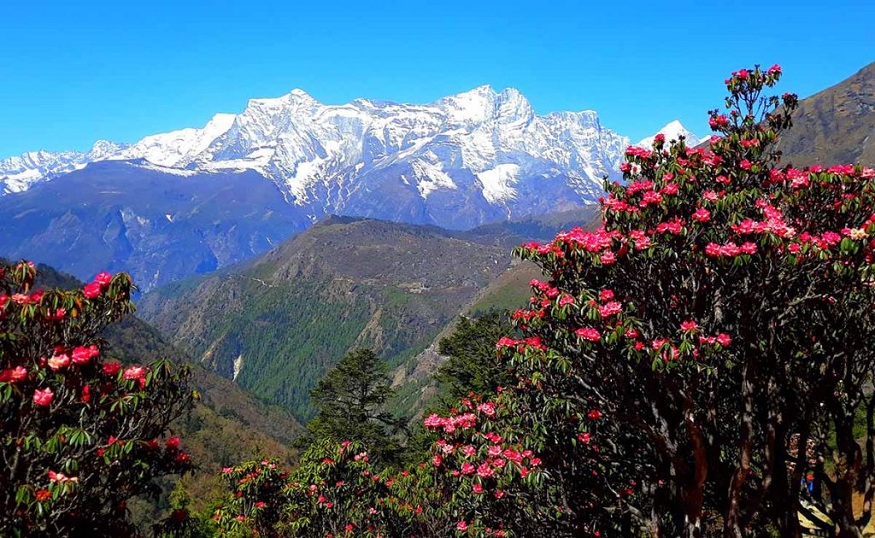
Forests then start to close in. Cultivated terraces yield to a wilder, deeper wood. Rhododendron trees dominate here. In spring, their canopy explodes into shocking crimson and soft pink. Sunlight filters through blooming branches in dappled patches. Enchanted is the only word for it.
Sound and movement fill this space. Bird calls echo in the canopy. Langur monkeys rustle through branches overhead. With luck, you might spot the flash of a musk deer. Trails feel soft underfoot with fallen leaves and pine needles. Small, chattering streams cross the path frequently. You are walking through a living, breathing ecosystem.
Trees begin to change as you push higher. Broad-leaved rhododendrons and oaks start thinning out. Tall, elegant pillars of Himalayan fir and hemlock replace them. Air grows noticeably cooler. Light becomes sharper and more precise. Longer views open through the trees, revealing valleys far below. Your sense of scale begins a permanent shift.
Suddenly, you break through the tree line. One moment offers the shade of tall firs. Next, you step into an immense, open space. The world opens up breathtakingly. This new alpine zone forces life close to the ground. Low juniper shrubs and hardy alpine grasses cling to thin soil. Colors mute to greys, browns, and dusty greens.
Mountains become immediate, overwhelming presences now. Machapuchare’s famous “Fishtail” peaks dominate the skyline. They look impossibly sharp against the blue. Walking happens in a landscape of pure rock and sky. Wind gains a constant voice here, whistling over stones and tugging at jackets.
Next comes the valley of the Modi Khola river. It is a dramatic geological scar carved by ancient glaciers. Trails cling to the side of a steep, V-shaped gorge. Water thunders distantly below. Sheer rock walls show stripes of different minerals. Sturdy metal bridges sway slightly underfoot. You feel wonderfully small in this raw, powerful place. It is the true gateway.
Your final approach to Base Camp feels otherworldly. Last traces of vegetation vanish completely. An alpine desert of grey and brown rubble remains. This crushed rock is moraine, pushed here by glacial force. Air sits thin and cold. Every breath requires conscious work. Boots crunch on scree and stone. Sound turns stark in the immense silence.
Great walls of ice and blue-tinged seracs rise suddenly. They are the snouts of the South Annapurna Glacier. Mountains no longer loom above. They surround you. You stand in the very heart of the range. Annapurna I, the tenth-highest peak on Earth, fills the northern sky. Its presence is a vast, silent fact of rock and snow.
Such a dramatic transition is no accident. It results directly from following a thoughtful full abc trekking itinerary. A proper plan uses these natural landscape stages for safe acclimatization. It allows you to sleep in forests, then alpine meadows, before tackling the high desert. Rushing this journey misses its entire point. Those days are needed to witness the world changing.
Biodiversity here tells a profound story of survival. Each plant finds its precise niche.
Rhododendrons thrive in moist soil. Tiny alpine flowers cling to rocky cracks. Seeing this life gradually strip away is humbling. You witness biology clinging to its last possible outposts.
Geology, meanwhile, speaks of unimaginable force. Smooth river stones in the lowlands began as jagged peaks. Towering cliffs were carved by water and ice over millennia. Walking this path is a journey through the earth’s own timeline. Every rock underfoot holds a history.
To trek to ABC is to read this living textbook. You feel the air thin. You hear forests fall silent. Watch as color drains from the world, leaving sublime geometry of rock and ice. Reaching the camp is spectacular. But the memory of the journey, of watching one world become another, is what truly lasts.