
The Limits of Intentionality in Travel
Modern travel is often governed by deliberate planning, where itineraries are constructed with precision and optimized for efficiency. Yet this rational approach can obscure a fundamental paradox: the most memorable experiences frequently arise from deviation rather than design. The insistence on prioritizing canonical destinations—those validated by guidebooks and collective expectation—tends to compress perception into predictable patterns. In contrast, the places one nearly omits, whether due to time constraints or perceived insignificance, often retain a degree of authenticity precisely because they are less mediated by anticipation.
The Value of Marginal Spaces
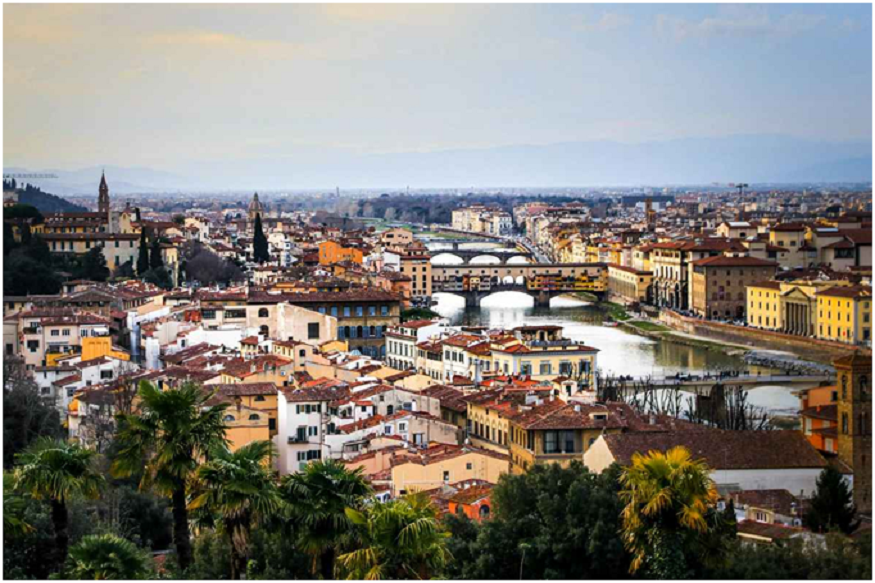
Locations that fall outside primary itineraries possess a distinctive epistemic value. They are not burdened by the weight of reputation and therefore permit a more direct encounter. In cities such as Florence, whose historical and artistic significance is globally acknowledged, this distinction becomes especially pronounced. While major institutions and monuments define the city’s intellectual framework, its peripheral spaces—minor chapels, artisan workshops, or quiet urban gardens—offer access to dimensions of experience that are less codified. Such environments allow the observer to engage without the interpretive scaffolding imposed by crowds or curated narratives.
Read More: Everything You Should Know Before Booking a Jet Car Ride in Dubai
Attention and the Conditions of Discovery
The capacity to recognize the significance of these nearly overlooked places depends on a particular mode of attention. It requires the suspension of instrumental thinking—the notion that value must be immediately apparent or externally validated. When travelers adopt a more receptive stance, they become attuned to subtleties: the interplay of light in an unremarked courtyard, the cadence of local conversation, or the material continuity between past and present embedded in everyday architecture. Florence, widely regarded as a central locus of Renaissance culture , exemplifies this phenomenon; its most profound insights are often encountered not in its most famous spaces, but in those that remain unanticipated.
Practical Knowledge and Local Insight
This orientation toward discovery does not require the abandonment of preparation; rather, it depends on a more restrained and functional use of it. General sources of practical information—often grouped under headings such as Florence Travel Tips—tend to outline patterns of crowd movement, optimal visiting periods, and basic logistical considerations. When treated simply as background knowledge rather than prescriptive authority, such information allows the traveler to move through the city with greater ease while preserving the possibility of deviation. The result is not a tightly controlled itinerary, but a flexible structure in which time is not entirely pre-allocated. Within this balance, unplanned detours cease to be disruptions and instead become integral to the experience, creating space for encounters that would otherwise remain unnoticed.
The Role of Proximity and Immersion
Where one stays also shapes the likelihood of encountering these overlooked spaces. A centrally located accommodation—particularly a luxury boutique hotel in Florence—can function as more than a logistical convenience. It situates the traveler within a dense network of cultural and social interactions, enabling spontaneous detours and repeated exposure to the surrounding environment. The walkability of Florence, noted for its compact historic center, further enhances this dynamic, allowing minor streets and less prominent sites to become integral to the experience rather than incidental . In such contexts, proximity facilitates serendipity.
Resisting the Hierarchy of Significance
Underlying the tendency to overlook certain places is an implicit hierarchy that privileges the monumental over the ordinary. This hierarchy is reinforced by cultural narratives that equate importance with visibility. However, such a framework is reductive. The so-called “minor” site may offer insights that are qualitatively distinct from those provided by major landmarks. It may reveal aspects of continuity, adaptation, or local identity that are obscured in more formal settings. By resisting this hierarchy, the traveler adopts a more nuanced understanding of place—one that recognizes value as distributed rather than centralized.
Read More: Why a Multi-Day Fly Fishing Adventure Is Worth It
The Productive Role of the Almost-Skipped
The places one nearly omits are not merely supplementary; they are often constitutive of the most meaningful travel experiences. Their significance lies in their capacity to disrupt expectation and to foster a mode of engagement that is both attentive and unstructured. In recognizing their value, the traveler moves beyond a model of accumulation toward one of interpretation. The result is a form of travel that is less concerned with completeness and more attuned to the conditions under which genuine discovery becomes possible.